• Zur Metanavigation
  • Zur Hauptnavigation
  • Zur Suche
  • Zum Inhalt
  • Zur Subnavigation
  • Zum Seitenfuß
  • University of Hamburg
  • For journalists
  • Staff Service Portal0
  • STiNE
https://www.kus.uni-hamburg.de/aktuelles.json?recentnews=true
  • Institutions and target groups
    • Einrichtungen
      • Faculties

        • Faculty of Law
        • Faculty of Business, Economics and Social Sciences
        • Faculty of Medicine
        • Faculty of Education
        • Faculty of Humanities
        • Faculty of Mathematics, Informatics and Natural Sciences
        • Faculty of Psychology and Human Movement Science
        • University of Hamburg Business School
      • Services

        • Study Information Net STiNE
        • Surfmail
        • Exchange
        • Staff Service Portal
        • Learning Platforms
        • Katalogplus – Catalogue of Hamburg Libraries
        • SharePoint
      • Student facilities and services

        • Campus Center
        • Career Center
        • PIASTA
        • AStA (student council)
        • University Sports
        • University Music
        • Family Office
        • University Language Center
        • General Languages
        • Office of Affairs for Students with Disabilities or Chronic Diseases
        • Departmental libraries
        • Healthy Campus
      • Further facilities and services

        • The Cluster of Excellence CLICCS
        • The Cluster of Excellence CUI
        • The Cluster of Excellence Quantum Universe
        • The Cluster of Excellence Understanding Written Artefacts
        • Hamburg Research Academy
        • Pier Plus
        • Hamburg Center for University Teaching and Learning (HUL)
        • Hub for Crossdisciplinary Learning (HCL)
        • CEN
        • Museums and collections
        • University Archives (in German)
        • Regional Computing Center (RRZ)
        • University Administration
        • Knowledge Exchange Agency
        • The Unikontor Shop (in German)
    • Target groups

      • Prospective students
      • Students
      • International prospective students
      • Young researchers
      • Researchers
      • Instructors
      • Staff
      • Prospective continuing education students
      • Alumni
      • Journalists
      • Refugees (in German only)
    Close
  • /sitemap.json
University of Hamburg - to research, to teach, to educate and form, to homepage
RomanIslam - Center for Comparative Empire and Transcultural Studies
  • Center
    • RomanIslam Center
    • Research Objective
    • Fellowship Program
    • Organizational Structure
    • Map & Directions
  • Team
    • Staff
    • Former Staff
    • Fellows 2020/21
    • Fellows 2021/22
    • Fellows 2022/23
    • Fellows 2023/24
    • Fellows 2024/25
    • Guests
    • Advisory Board
    • Quick Directory
  • News and Events
    • News
    • Lecture Series RomanIslam
    • Lecture Series RomanIslam - German Archaeological Institute (DAI) Rome
    • Lecture Series "Key Words"
    • Round Tables / Book presentations
    • Workshops
    • Summerschool
    • Guest Lectures
    • Highlights
  • Publications & Media
    • Mediathek
    • Publications on Iberian Peninsula
    • Publications on Northafrica
    • RomanIslam Annual Volume
  • Cooperation
  • Library
    • Bibliographic Support
    • Catalogues
    • Databases
    • Other Relevant Hamburg Libraries
    • RomanIslam Library Guide
    • Suggest a book

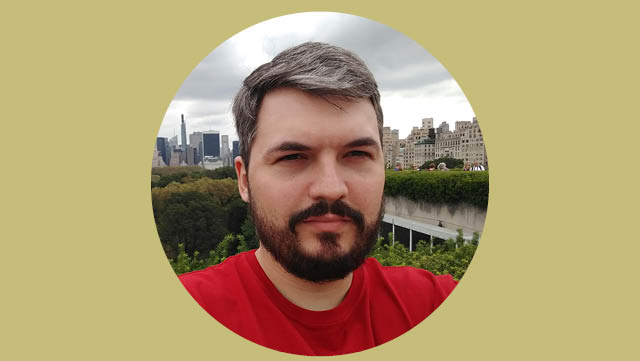
Photo: © Dávila

  1. UHH
  2. RomanIslam - Center for Comparative Empire and Transcultural Studies
  3. Team
  4. Fellows 2022/23
  5. Dr. Paulo Pachá

Dr. Paulo Pachá

June 2022 - March 2023
Research Project: Urban Change and the Construction of Episcopal Power in Visigothic Iberia

During the Visigothic period, the classical city was developed and transformed. While the transformation of urban space during the sixth and seventh centuries resulted from many diverse processes, the centrality of Christianization and episcopal agency is undeniable. Moreover, episcopal power and authority had a double edge: on the one hand, its basis was in the cities – the transformation of urban space being one of its main elements; on the other hand, this local power was the basis of a supralocal power that, by its turn, also strengthened local authority. This project has two central and related objectives: 1) to investigate how the development of episcopal power in the cities was related to bishops’ activities as builders; 2) to analyze how episcopal power in changing local conditions was related to the development and transformation of episcopal power in supralocal spheres, i.e., Kingdom-wide. We propose an analysis centered on the local sphere – the cities and their transformation – to shed a different light on these questions. Therefore, our focus lies in bishops as central urban agents and, consequently, their relationship with urban communities and the transformation of urban space. Our three case studies – Toledo, Mérida, and Braga – were metropolitan sees. Still, each of these cities had specific characteristics and represented a different type of relationship at the local and supralocal levels. Therefore, as case studies, they can provide us with enough comparative elements to investigate their urban transformation and the development of episcopal power. Episcopal building programs are one of the best ways to evaluate the development of episcopal authority and power in the urban space. While bishops built in their cities, they also built and affirmed their power – in their cities and beyond. In this way, bishops used the urban space to demonstrate the interplay between communities, their leadership, and the holy. Thus, we hypothesize that even when bishops were immersed in the central power as leading figures, the basis of their power was always local – their cities and communities.  

Profile

Dr. Paulo Pachá is Assistant Professor of Medieval History at Universidade Federal do Rio de Janeiro (UFRJ). He is a historian specialized in the history of Early Medieval Europe. He received his PhD in History in 2015 from the Universidade Federal Fluminense, with a thesis on the structure and dynamics of the Visigothic state in the seventh century. Paulo is a member of research groups in Brazil as the “Centro Ciro Cardoso de Pesquisa do Pré-Capitalismo (CCCP-PréK)" and "PEM - Programa de Estudos Medievais". He is also a member of “TOLETUM – Red para la investigación sobre la Península Ibérica en la Antigüedad”. Paulo has published several articles, book chapters and book reviews on the history of the Visigothic Kingdom of Toledo and presented his work at conferences in South America, the USA and Europe. After receiving his doctorate, he was Visiting Researcher at the Institut für Mittelalterforschung in Vienna (with a fellowship from the Österreichischen Akademie der Wissenschaften) and postdoctoral research fellow at the Hamburg Universität (with a fellowship from the Fritz Thyssen Stiftung). During his doctorate, Paulo was awarded two research fellowships in Madrid, at the Centro de Ciencias Humanas y Sociales (CCHS-CSIC) and the Casa de Velázquez. Before becoming Assistant Professor at UFRJ, he was a Lecturer in Medieval History at the Fundação Getúlio Vargas and Assistant Professor of Medieval History at Universidade Federal Fluminense.

CV

Selected Publications

Paulo Pachá / Sabine, Panzram, eds., (2020a), The Visigothic Kingdom. The Negotiation of Power in Post-Roman lberia, Amsterdam: Amsterdam University Press, 2020.

Paulo Pachá (2020b), "Conclusions and Future Perspectives", in: Sabine Panzram / Paulo Pachá, eds., The Visigothic Kingdom. The Negotiation of Power in Post-Roman lberia, Amsterdam: Amsterdam University Press, 393-400.

Paulo Pachá (2020c), "Beyond Central and Local Powers", in: Sabine Panzram / Paulo Pachá, eds., The Visigothic Kingdom. The Negotiation of Power in Post-Roman lberia, Amsterdam: Amsterdam University Press, 101-116.

Paulo Pachá (2019), "To name and control: space and power in the integration process of the Visigothic Kingdom of Toledo", Mélanges de la Casa de Velázquez, 49.2, 109-131.

Paulo Pachá (2017), "Law, Networks of Power and Integration: Recceswinth and the Liber Iudiciorum", in: Dolores Castro / Michael J. Kelly, eds., Visigothic Symposia I: Law and Theology, online, 169-193, 2017.

Paulo Pachá (2014), "Gift and Conflict: Forms of Social Domination in the Iberian Early Middle Ages", Networks and Neighbours 2, 288-324.
 More

  • https://ufrj.academia.edu/PauloPacha
  • https://www.pem.historia.ufrj.br/pacha.htm
  • Team

  • Staff
  • Former Staff
  • Fellows 2020/21
  • Fellows 2021/22
  • Fellows 2022/23
    • Dr. Hamden Ben Romdhane
    • Dr. Ralf Bockmann
    • Dr. Amel Bouder
    • Dr. Nouri Boukhchim
    • Dr. Jelle Bruning
    • Dr. Angelo Castrorao Barba
    • Prof. Dr. Abdelmouhcin Cheddad
    • Dr. Fabrizio Ducati
    • Dr. Paloma Martín-Esperanza Montilla
    • Prof. Dr. Maribel Fierro
    • Prof. Dr. Enrique García Riaza
    • Prof. Dr. José Antonio Garriguet Mata
    • Dr. Carmen González Gutiérrez
    • Prof. Dr. Ignasi Grau Mira
    • Dr. Dana Katz
    • Dr. Janine Lehmann
    • Dr. Meriem Marzouki
    • Dr. Paulo Pachá
      • Prof. Dr. Thomas Schattner
    • Fellows 2023/24
    • Fellows 2024/25
    • Guests
    • Advisory Board
    • Quick Directory
    Dr. Paulo Pachá
    Visiting Scholar
    Universidade Federal do Rio de Janeiro - Instituto de História
    Largo São Francisco de Paula, n° 1 – Centro
    20051-070 Rio de Janeiro
    Email: pacha"AT"ufrj.br
    Paulo Pachá

    Last update: 17 October 2022

    • Feedback
    • Legal notice
    • Privacy statement
    • Accessibility
    • Site map

    University of Hamburg

    Innovating and Cooperating for a Sustainable Future in a Digital Age

    • Follow us on Instagram.
    • Follow us on Facebook.
    • Connect with us on LinkedIn.
    • Follow us on Mastodon.
    • Follow us on Bluesky.
    • Subscribe to our channel on YouTube.
      • Studies
      • Prospective students
      • Continuing education
      • Research
      • Teaching at UHH
      • Doctoral studies
      • Job opportunities
      • Knowledge exchange
      • University
      • Excellence
      • Faculties
      • Alumni
      • Contact
      • Campus Navigator
      • UHHApp
      • Emergencies, safety and security
      • Antidiscrimination
    Go to family-friendly higher education institution audit
    Go to internationalisation re-audit
    Go to the Sustainability Audit page
    Go to Diversity Audit
    Go to System accreditation

    © 2026 University of Hamburg. All rights reserved